Baklava: The Craft Behind Every Layer
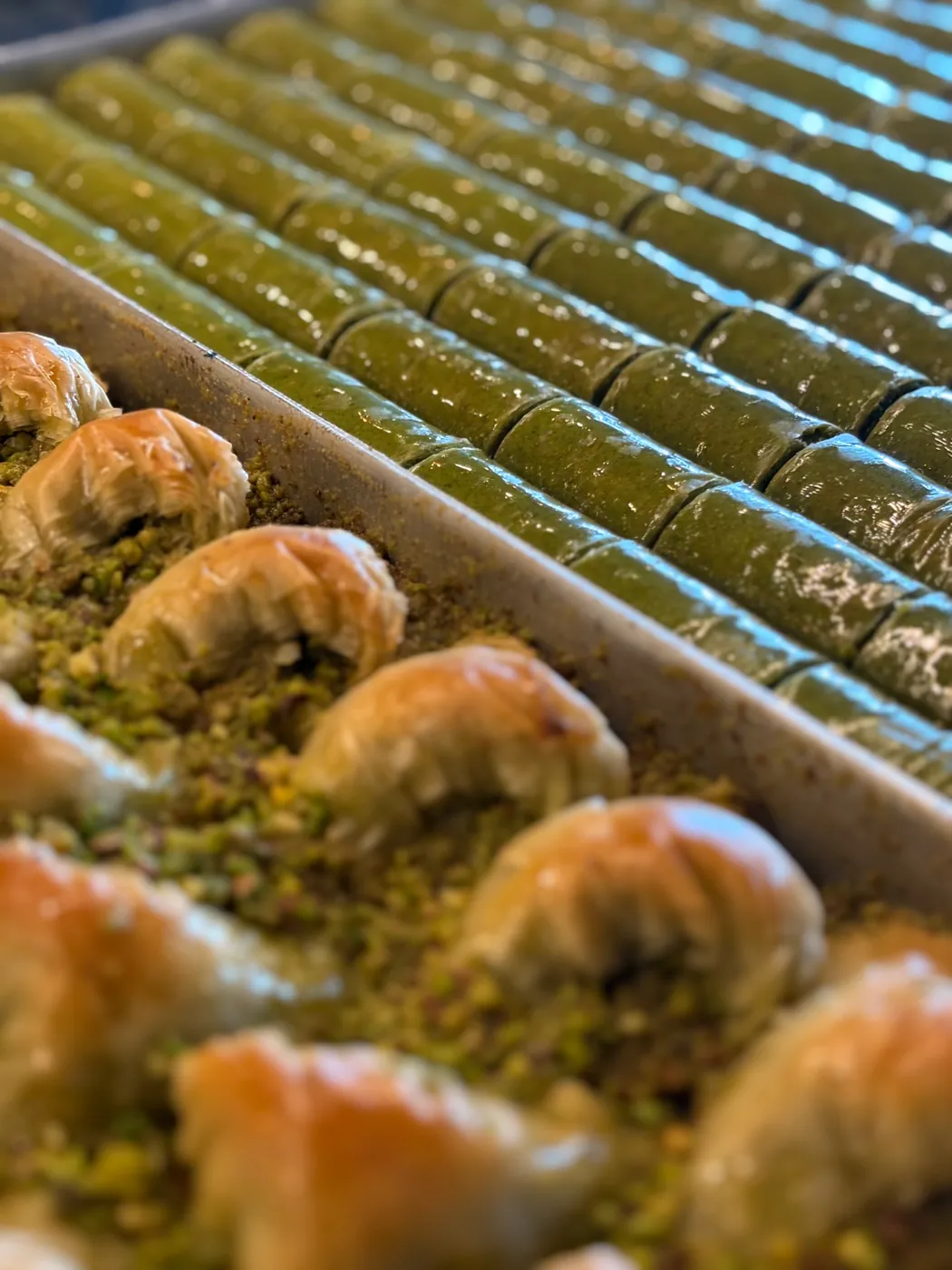
Baklava is the dessert most people picture when they think of Turkish sweets, but the version you'll find in a great Turkish bakery has very little in common with the dense, syrup-soaked squares sold in supermarkets. Real baklava is light, crisp, and balanced — the work of careful hands and quality ingredients.
What goes into a tray
Just a few things, done well: tissue-thin filo, clarified butter, premium pistachios or walnuts, and a syrup of sugar, water, and lemon. The skill is in how they're combined — the filo is layered dozens of times, each sheet brushed with butter, with the nut filling layered through.
The bake and the syrup
Baklava is baked until each layer turns golden and shatters at the touch. Then it's finished with syrup, poured cold over hot baklava (or hot over cold) so the layers stay crisp instead of going soggy. The ratio of syrup to pastry is what separates light, elegant baklava from the cloying version.
How to taste it
Best enjoyed at room temperature, in small pieces, alongside Turkish coffee or tea. The bitterness of the coffee plays against the sweetness of the syrup, and the pistachios round it out.
Order fresh in Ottawa & Kanata
We bake baklava in small batches at both locations and offer it by the piece, by the tray, and for catering. See the menu or contact us about custom platters for celebrations.
Frequently Asked Questions
- What's the difference between Turkish and Greek baklava?
- Turkish baklava traditionally uses pistachios and a lighter syrup, while Greek baklava often uses walnuts and honey. Both share the layered filo technique.
- How long does baklava stay fresh?
- Stored at room temperature in a sealed container, baklava stays fresh for about a week. Refrigeration softens the filo and isn't recommended.
- Can I order baklava trays for events?
- Yes — we offer baklava trays for weddings, holidays, and corporate events. See our catering page or contact us at either location.